
22 September 2026
Baker McKenzie (2026): up to 1,000 support roles cut, AI named as a reason. The checking is now the lawyer’s.
In the first week of February 2026 Baker McKenzie confirmed cuts of up to 10 percent of its global business services workforce, 600 to 1,000 roles across research, know-how, marketing and secretarial support, and named AI as a reason. Clifford Chance and Freshfields had already made the same move. The lawyers stay; the people who checked their work go. The duty to have checked did not move. What that means for a professional body whose members work in firms like these, why awareness CPD no longer answers the question, and the one competence that has to be taught, practised and evidenced now.
Read Article →
16 September 2026
PwC (2026): 30 skills for an AI-native workforce, and a rule that AI is never taught on its own
On 5 February 2026 PwC US launched the Learning Collective: 30 named skills, 15 AI and 15 human, with a firm-wide rule that an AI skill is never taught without a human skill beside it. Judgement, critical thinking, scepticism about an output: every one of the 15 human skills has been in a professional body’s competence framework for a century. The difference is that PwC’s version names AI in every line, was written this year, and is the one its people are measured against on a Monday. What an employer’s definition of judgement with AI means for a body’s own framework, three things a firm’s list can never do, and the one rule worth adopting this quarter.
Read Article →
9 September 2026
Santander (2026): AI tools for all 185,000 staff, mandatory AI training, and a €1 billion target
On 22 June 2026 Santander extended AI tools to all 185,000 employees and made AI training mandatory, with a €1 billion target by 2028. Citi, JPMorgan and Bank of America have done the same. That is the employer’s layer: it teaches the tool. Inside those banks are thousands of chartered accountants, actuaries, solicitors and compliance officers whose duties of confidentiality, verification, disclosure and judgement belong to their professional body, and no employer’s module can certify them. The profession owns the second layer, and the bodies that build it first will find the banks grateful.
Read Article →
2 September 2026
They looked like they were learning. Then the AI was taken away.
Two peer-reviewed trials in 2025 put the same AI in front of students. At Harvard it doubled learning. In Turkey, once the chatbot was taken away, students scored 17 percent worse than those who never had one. Same technology, opposite result, and the difference was one design decision made by a subject expert before anyone logged on. Why that is the test to put to anyone selling a professional body a CPD programme about AI.
Read Article →
26 August 2026
The delivery got better four times. The measure never moved.
Since 1994 the way digital learning is delivered has been rebuilt four times, and the number reported to a board has not changed once. Medicine answered the capability question in the 1970s with examiners watching candidates one at a time, at a published cost of up to eighty-six euro a head, which put it out of reach of ordinary CPD. It was never neglect. It was arithmetic. And the expensive part, a qualified person reading what somebody did and writing up what it meant, has just stopped being expensive.
Read Article →
19 August 2026
One test, five ways of scoring it. Only one of them worked.
Researchers gave 142 medical students one test, then scored the same answers five different ways. Reliability ranged from 0.39 to 0.85 depending purely on the arithmetic applied afterwards. Most scored modules in this industry use a plain points total, which sits near the weak end of that range. What a scoring key actually is, why a points total is the wrong instrument for a credential, and the honest limit on what a short module can measure about a person.
Read Article →
12 August 2026
How much does it cost to build a training programme? The industry's answer was written in 2010
Almost every cost estimate in this market traces back to one study collected in September 2010, and the part nobody quotes is its cost figures. Where the money actually goes now, why two honest quotes for the same brief differ by a factor of ten, how to use a pilot properly, and the five questions worth asking instead of cost per finished hour. With a free calculator that shows what you could take off your own quote.
Read Article →
5 August 2026
The best digital learning experience I know was built in 2013
Decision-based learning has been known to work for decades. It was rarely used, because every path had to be built and every path cost money, so most organisations settled for a slideshow with a Next button. AI changed the price of a branch, not the capability. Why the countable version is the defensible one, the 486 routes through our own module, and the certification defect we found in two of them on launch day.
Read Article →
29 July 2026
Module 1 of AI for Professional Practice is live. It asks how carefully you check AI output, then shows you not checking.
A free CPD module for regulated professionals. About twenty minutes, one sitting, no sign-up to start. It opens by asking how thoroughly you check AI output before your name goes on it, then ninety seconds later hands you a document citing an authority that does not exist. What is in it, how it is assessed, and why the assessment is deliberately not AI-adaptive.
Read Article →
28 July 2026
The AI Act's transparency rules were not delayed. From 2 August, your synthetic presenter is caught.
Everyone read that the AI Act was delayed and stopped there. High-risk did move, to December 2027. Article 50 did not, and it applies from Sunday. The Commission's final guidelines, adopted eight days ago, confirm that a realistic synthetic person who does not exist is a deepfake under the Act. What is caught, what is not, and why the date that matters is generation rather than publication.
Read Article →
22 July 2026
AI literacy, in plain English: what the Act is really asking of your people
From 2 August your people are meant to be "AI literate," and most of what gets sold under that label will teach the wrong thing: prompts and buttons. The real thing is older and simpler. A machine can write the letter, it just cannot be the one who signs it. What being AI literate actually comes down to, in plain English, no jargon anywhere.
Read Article →
15 July 2026
Custom eLearning versus off the shelf: when not to hire us
Every article on this question is written by a company that sells custom eLearning, and every one of them concludes that your situation is the special one. This one starts at the other end. The three cases where you should buy off the shelf and not call us, the single test that actually separates the two (what is the cost of the learner getting it wrong?), the exception for anyone who certifies, and the failure both options share.
Read Article →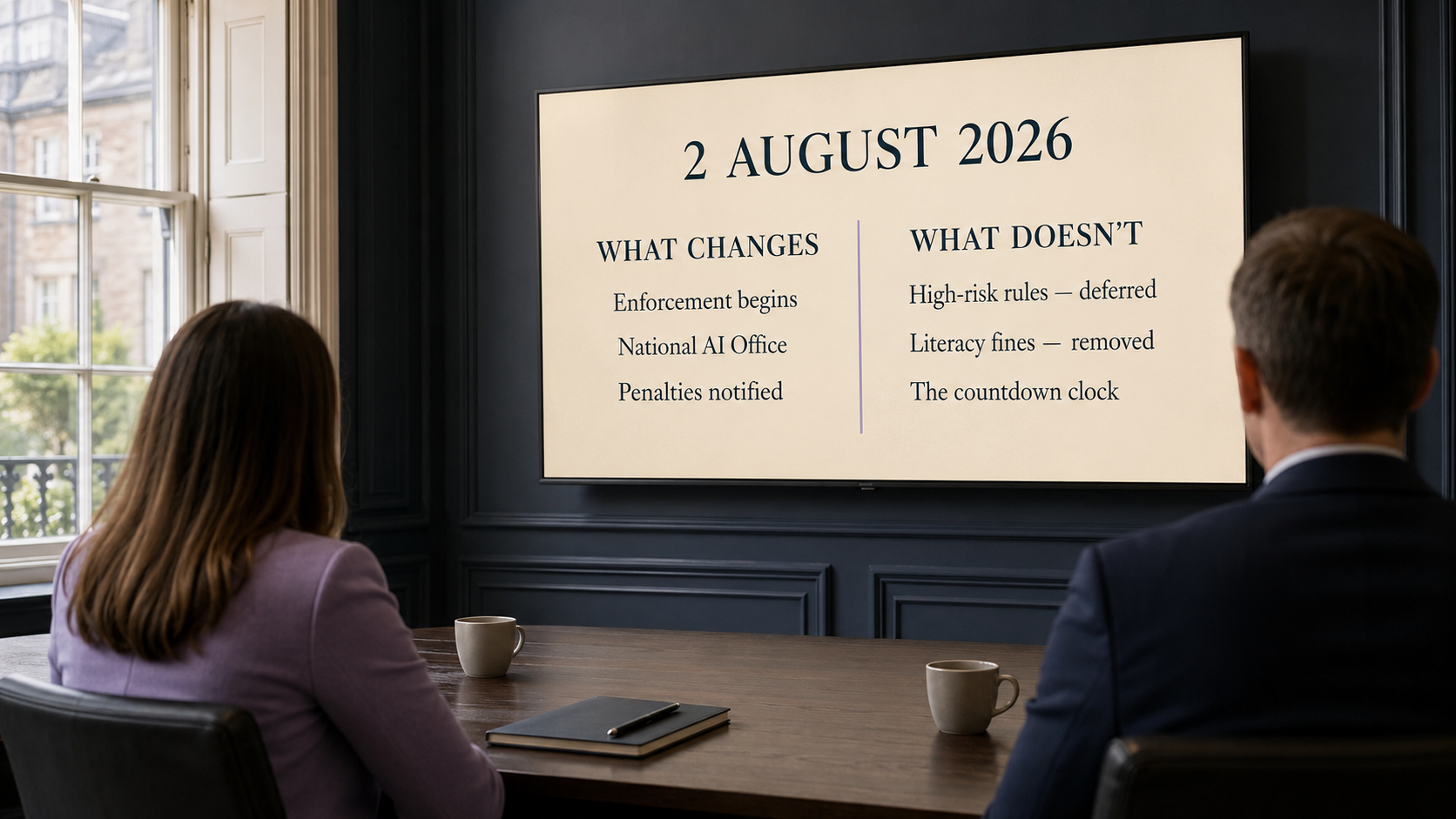
9 July 2026
What actually happens on 2 August 2026 (and what doesn't)
The EU AI Act's enforcement architecture arrives on 2 August, the National AI Office, thirteen sectoral regulators, the penalty framework. But the high-risk rules were deferred, the literacy obligation was softened, and the countdown clock so much training was sold against has been quietly dismantled. The record corrected, and the professional accountability question that survives every amendment. Plus the announcement of what we've built on that ground.
Read Article →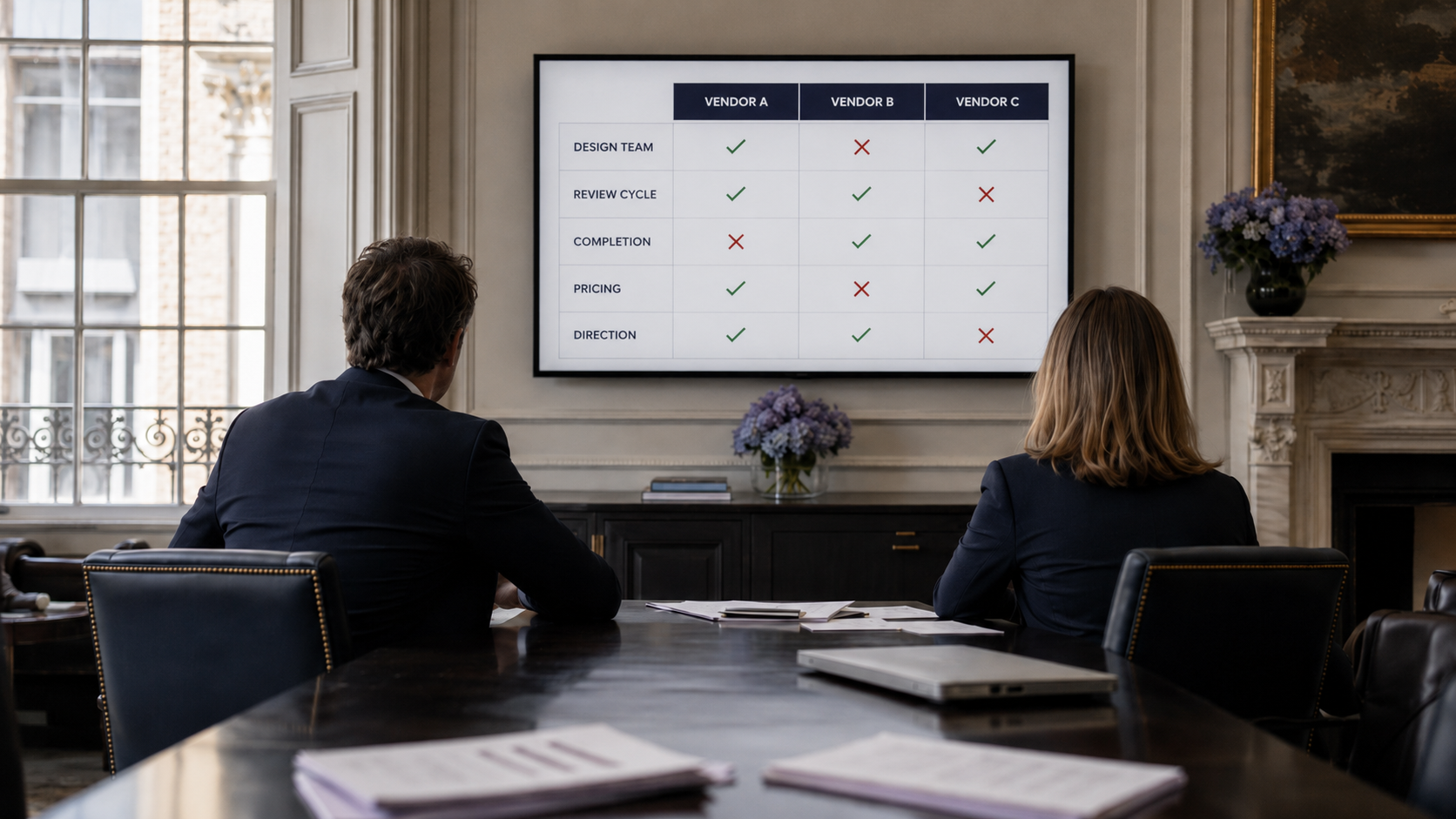
8 July 2026
How do you choose a custom eLearning company? The questions that actually separate providers
The shortlist arrives and every provider on it sounds identical, custom, learner-centred, engaging. The differences are real, but proposals are optimised to win work, not to predict how it will go. Five questions that force the conversation off the pitch and onto the delivery: who actually does the design work, how the review cycle is run, what gets engineered for completion, what the price quietly omits, and where the work is directed. Plus a five-minute test that outperforms every capability deck.
Read Article →
1 July 2026
What a custom eLearning build actually looks like in 2026
You don't commission custom builds often, so when you do, you're making a six-figure decision on a process you've only seen from outside, while the market sells you a story about how fast and cheap AI has made it. AI has genuinely compressed production. It hasn't touched the parts that decide whether your programme is any good: the design judgment, getting knowledge out of your experts, the review cycle, and engineering completion. The honest shape of the work, and where the risk actually sits.
Read Article →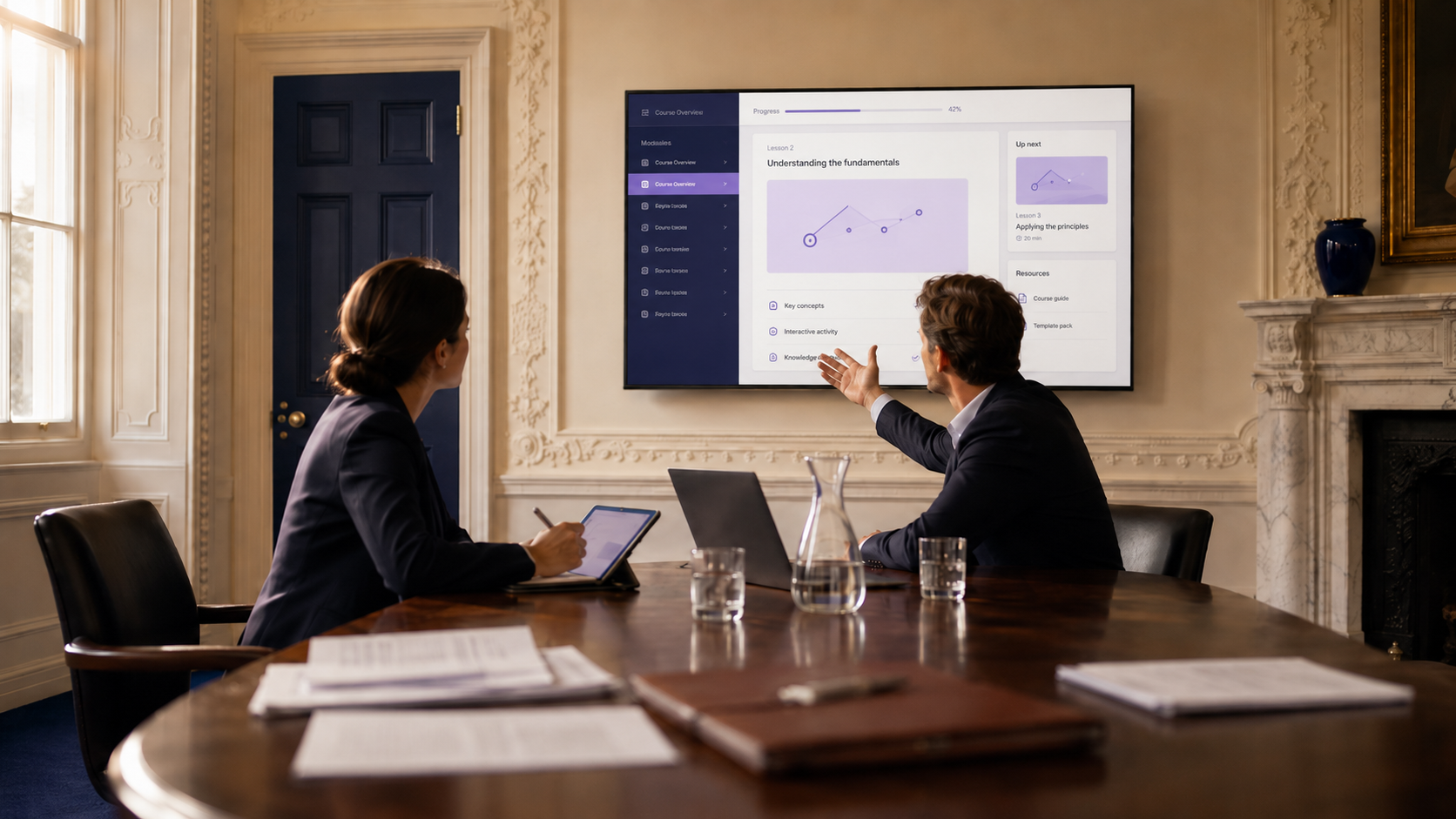
24 June 2026
Why your custom e-learning still has low completion rates
You paid for bespoke courses to fix the completion problem, and the dashboard still shows a strong start and a long tail of half-finished records. The cause usually isn't the learner or the platform. It's a set of decisions made at the design stage, before the first module is built: module length, a reason to return, where assessment lives, engineered relevance, and who owns completion. The build-time choices that decide whether a custom programme gets finished.
Read Article →
17 June 2026
The finance CPD completion rate you chase every year is a design problem in disguise
The completion statistics that frighten finance education teams come from optional, consumer learning. Regulated finance CPD is mandatory, the regulator has already solved the motivation problem. So a programme that still only hits its target through constant administrator follow-up doesn't have a learner problem. It has a design problem. What self-sustaining completion is actually built from.
Read Article →
10 June 2026
The AI Act's high-risk rules just slipped sixteen months. The good certification bodies won't slow down.
The EU has provisionally delayed the AI Act's high-risk rules to December 2027. But the delay is narrower than the headline: it isn't law yet, the Article 4 literacy duty wasn't moved, and the high-risk regime covers AI used to evaluate learning outcomes. What it actually changes for certification bodies, regulated training providers, and corporate academies using AI in assessment and CPD.
Read Article →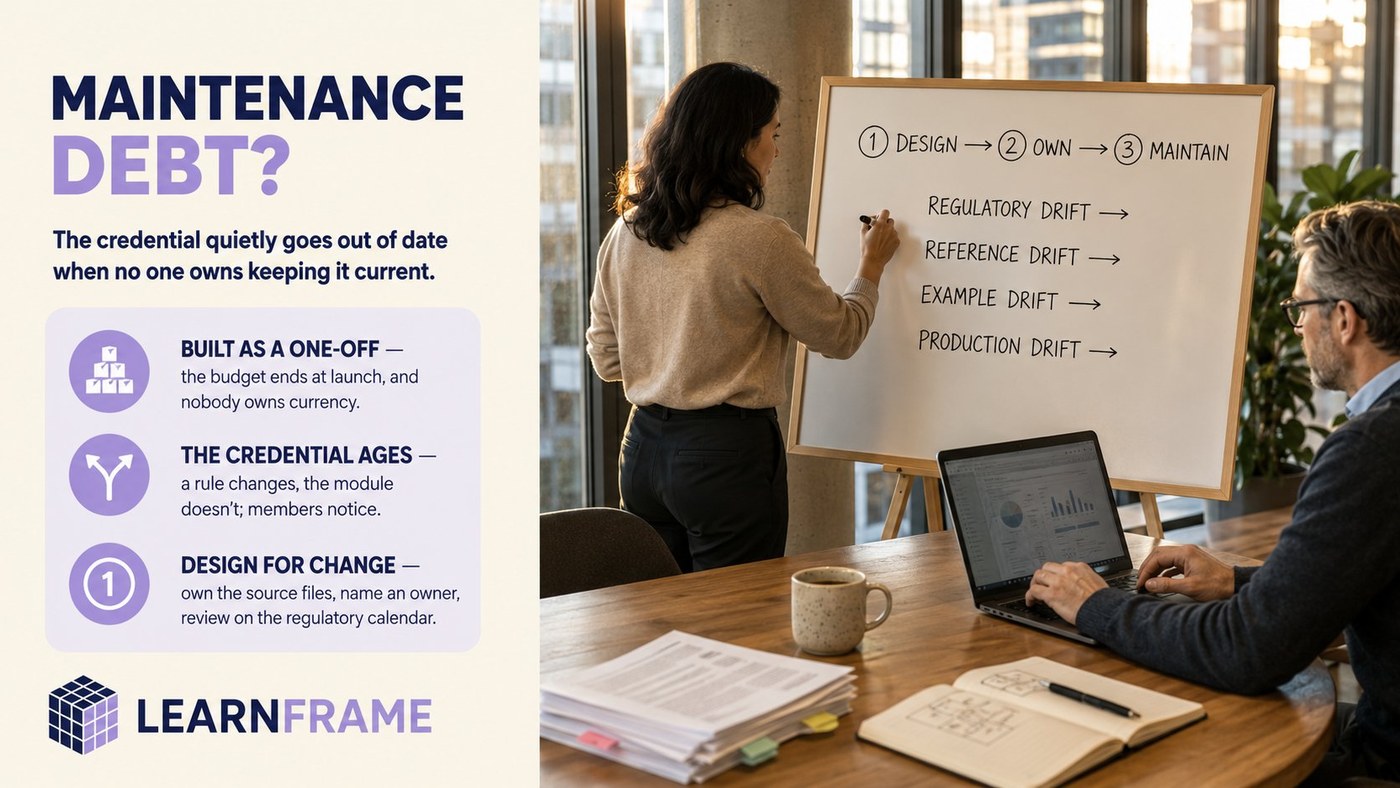
3 June 2026
Maintenance debt: the design failure that quietly ages a regulated credential
A regulated programme is accurate at launch and quietly wrong eighteen months later, because the budget was a build budget and nobody owns currency. The four forms ageing takes, why it happens, and a six-question maintenance diagnostic for Heads of Learning at certification bodies, regulated training providers, and corporate academies.
Read Article →
28 May 2026
Assessment-bolted-on: the design failure that quietly degrades digital credentials
Digital programmes drift when assessment is the last decision in the work plan, not the second. The four specific drifts, why they happen, and a six-question diagnostic for Heads of Programme at professional certification bodies, regulated training providers, and corporate academies.
Read Article →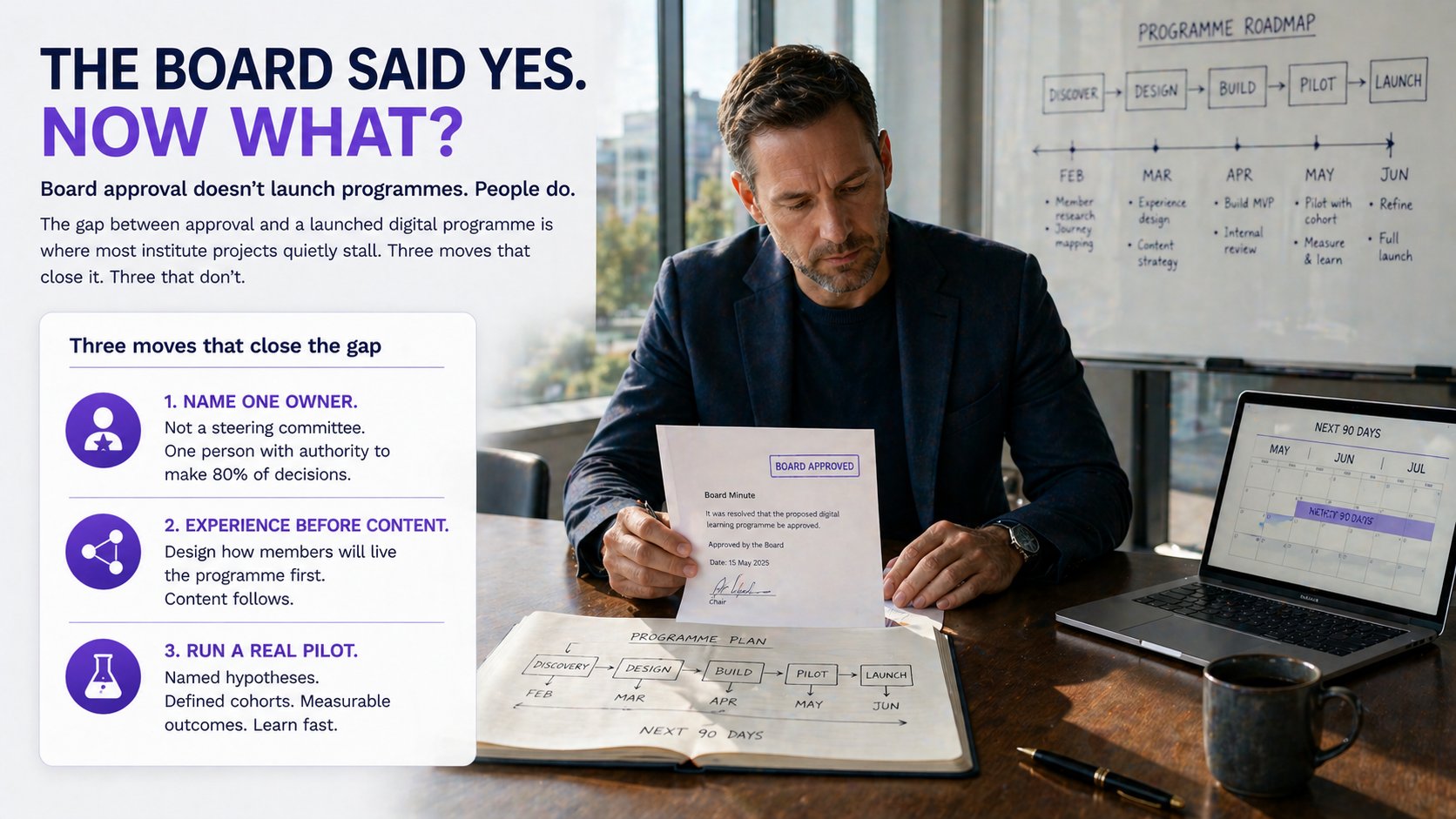
29 April 2026
What Happens After the Board Says Yes
The gap between board approval and a launched digital programme is where most institute projects quietly stall. Three moves that close it. Three that do not.
Read Article →
22 April 2026
The AI Act Deadline Most Organisations Are Not Ready For, and Why
Article 4 of the EU AI Act requires every organisation deploying AI tools to ensure workforce literacy. The deadline is 2 August. Most have quietly missed it.
Read Article →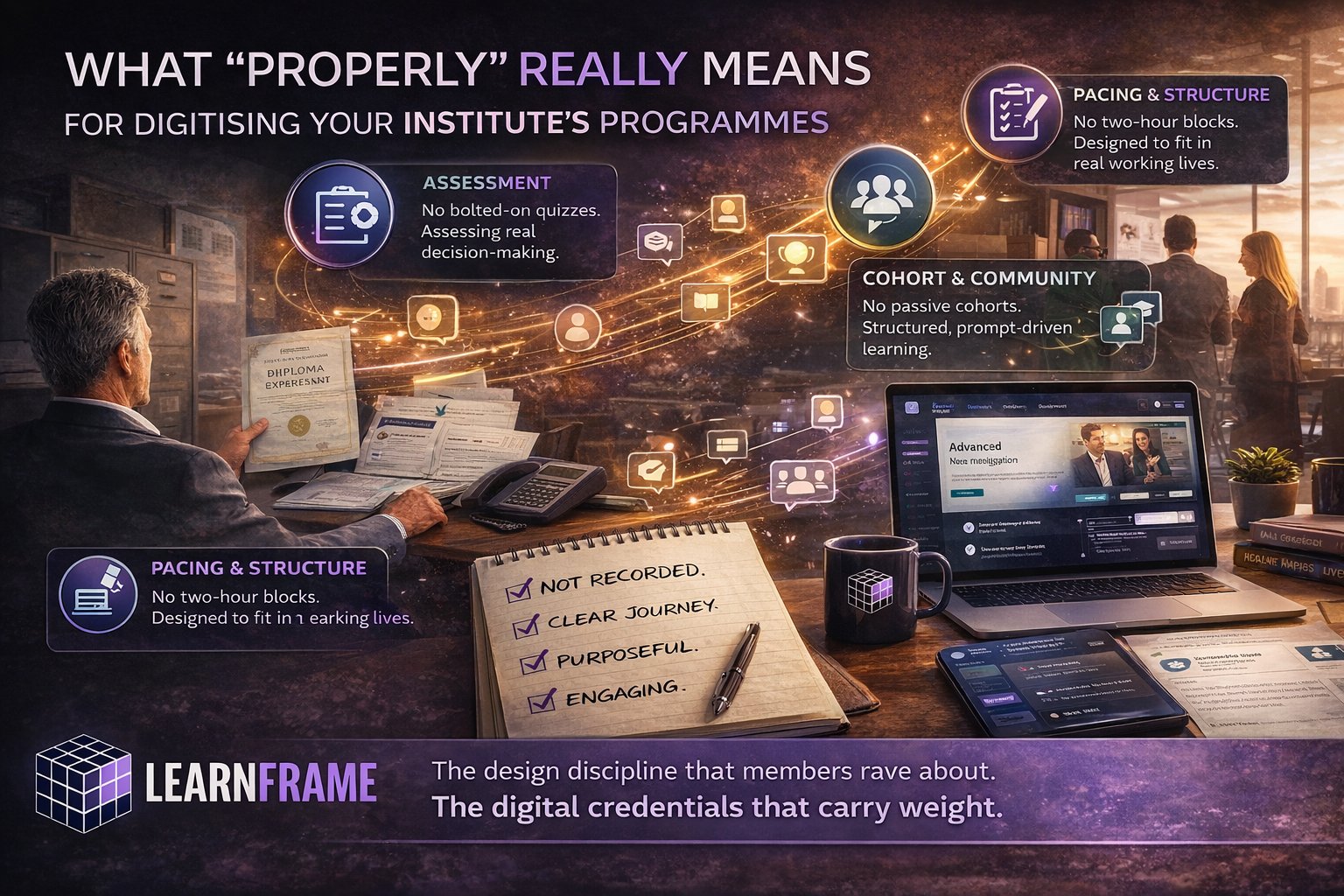
15 April 2026
What "Doing It Properly" Actually Means When You Digitise a Professional Programme
Six dimensions that separate the institute programmes members rave about from the ones members ask when the classroom version is coming back.
Read Article →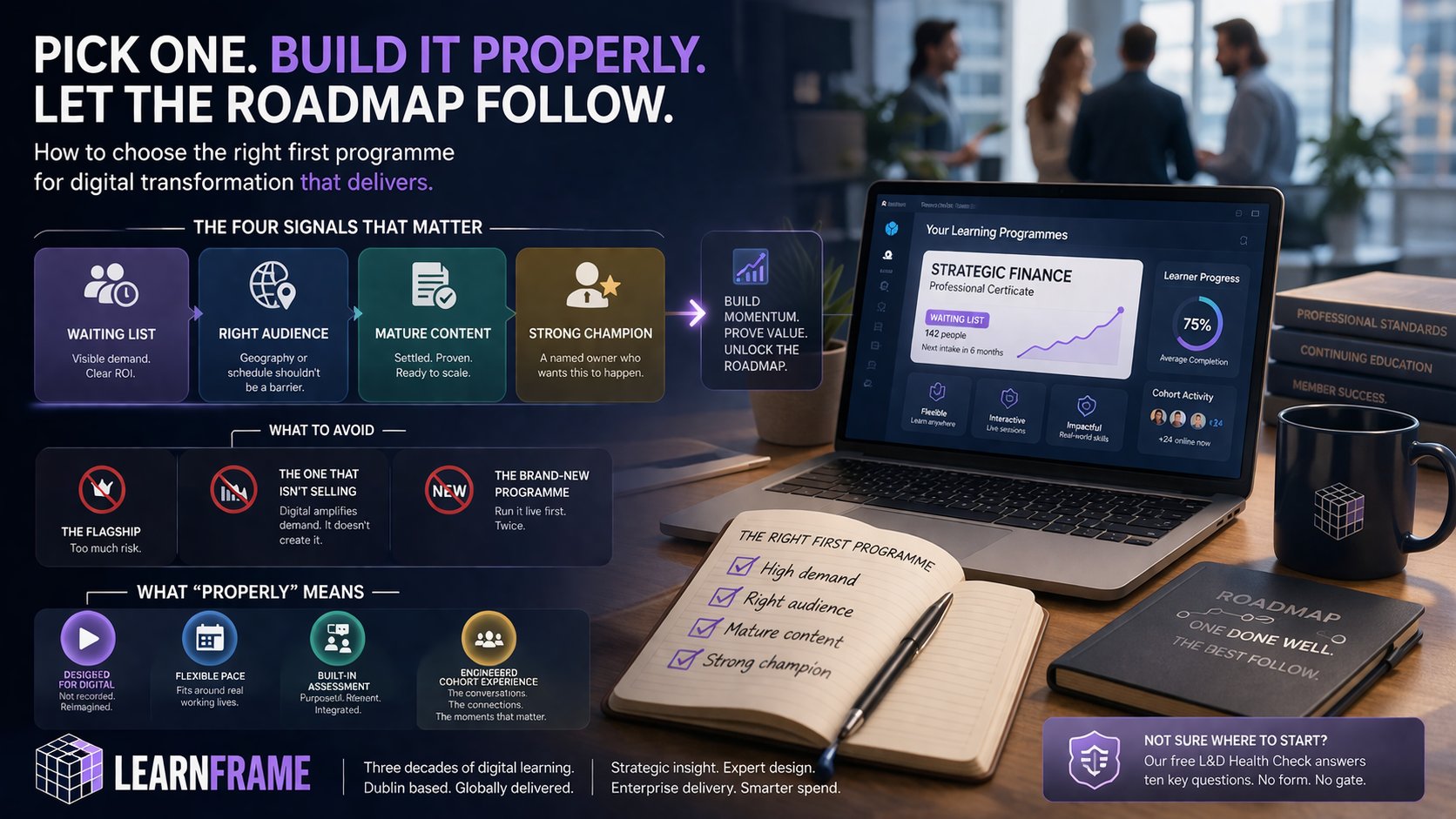
8 April 2026
How to Choose the First Programme to Digitise (And Why Most Institutes Pick the Wrong One)
Most professional institutes pick the wrong first programme to digitise. Four signals that identify the right one, and three categories to deliberately avoid.
Read Article →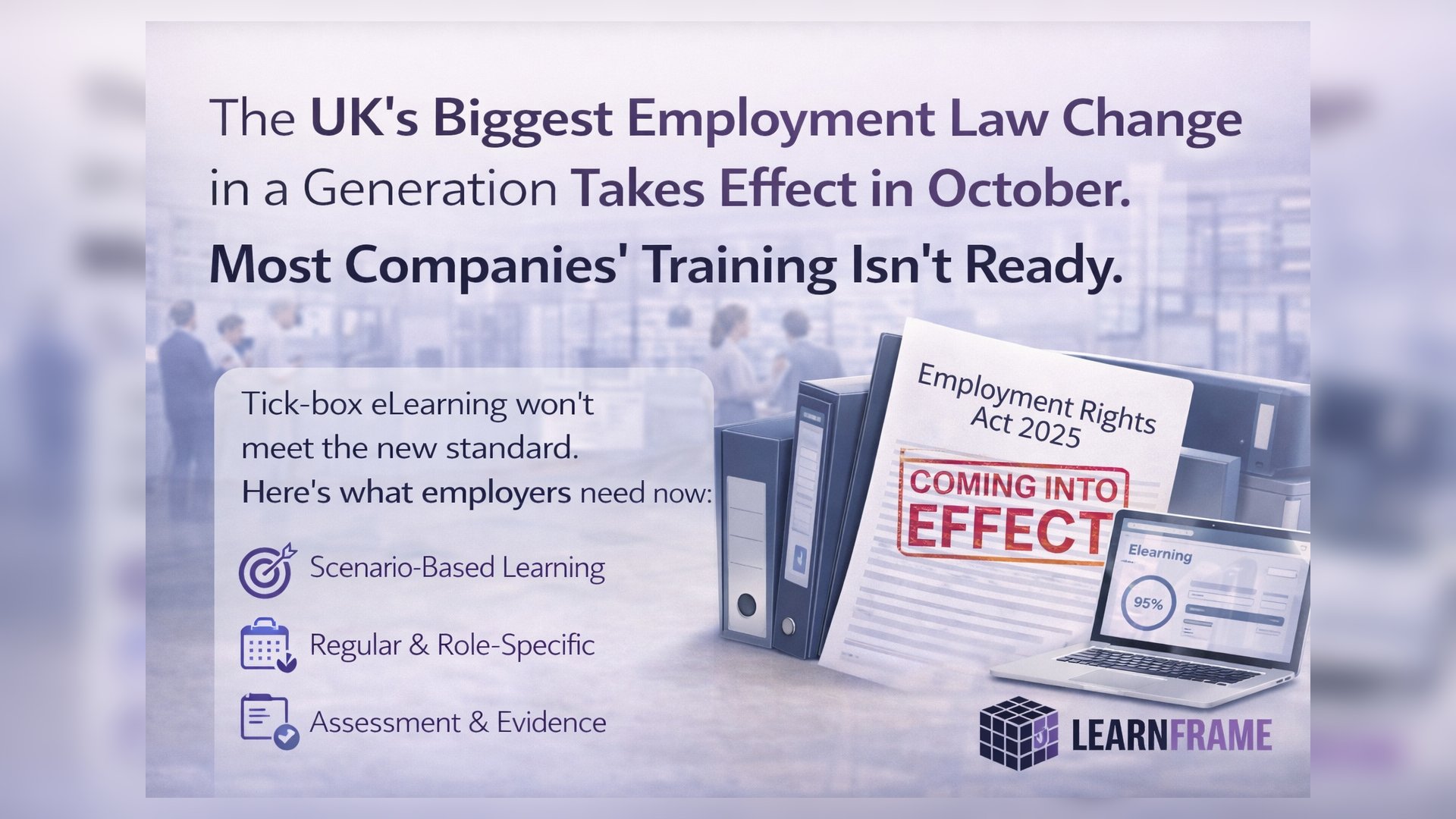
2 April 2026
The UK's Biggest Employment Law Change in a Generation Takes Effect in October. Most Companies' Training Isn't Ready.
The Employment Rights Act 2025 raises the bar on compliance training. Tick-box eLearning won't meet the new standard. Here's what employers need now.
Read Article →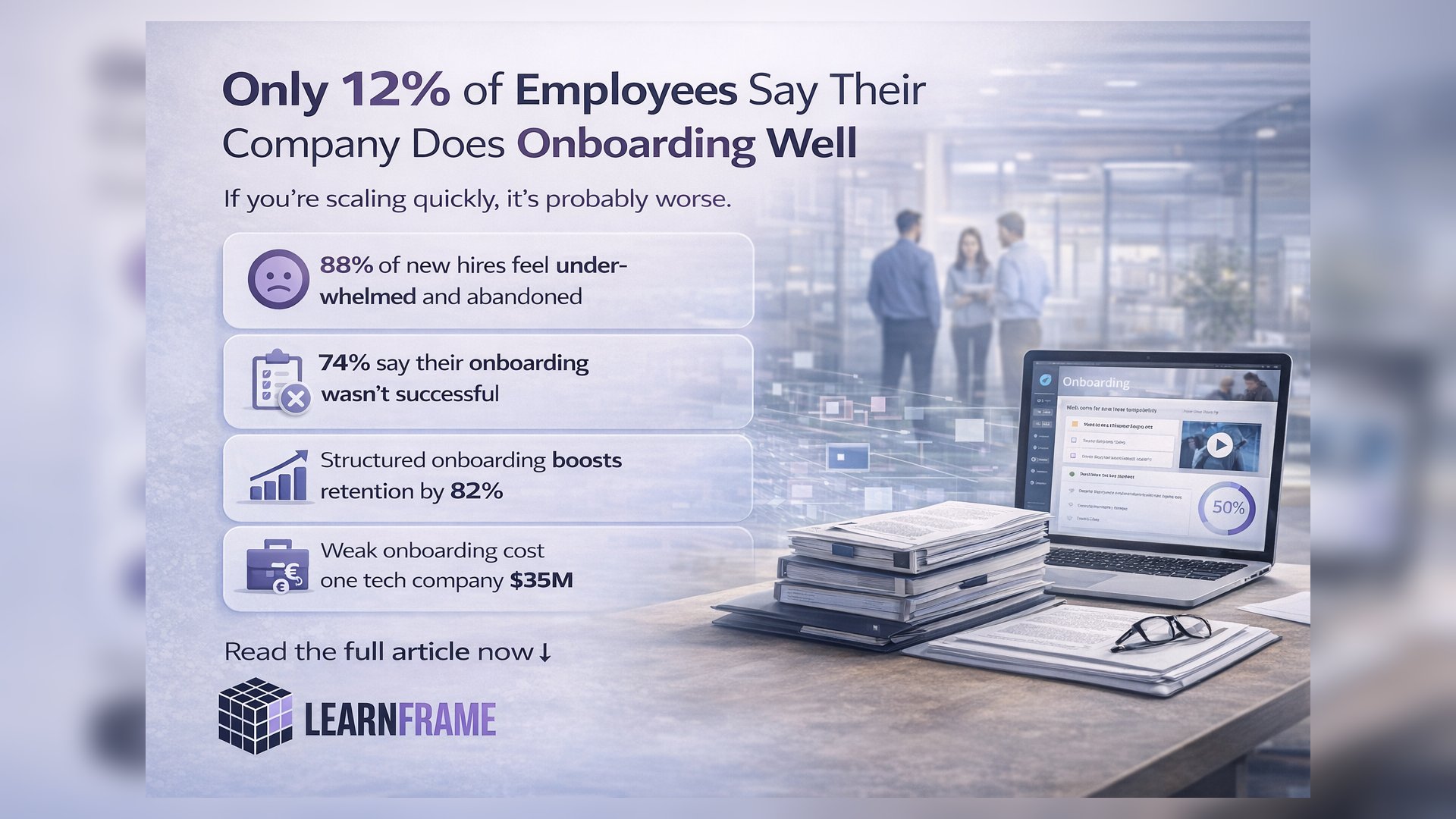
26 March 2026
Only 12% of Employees Say Their Company Does Onboarding Well. If You're Scaling, That Number Is Probably Worse.
For fast-growing companies, the gap between hiring speed and training quality is where talent gets lost. Here's what to do about it.
Read Article →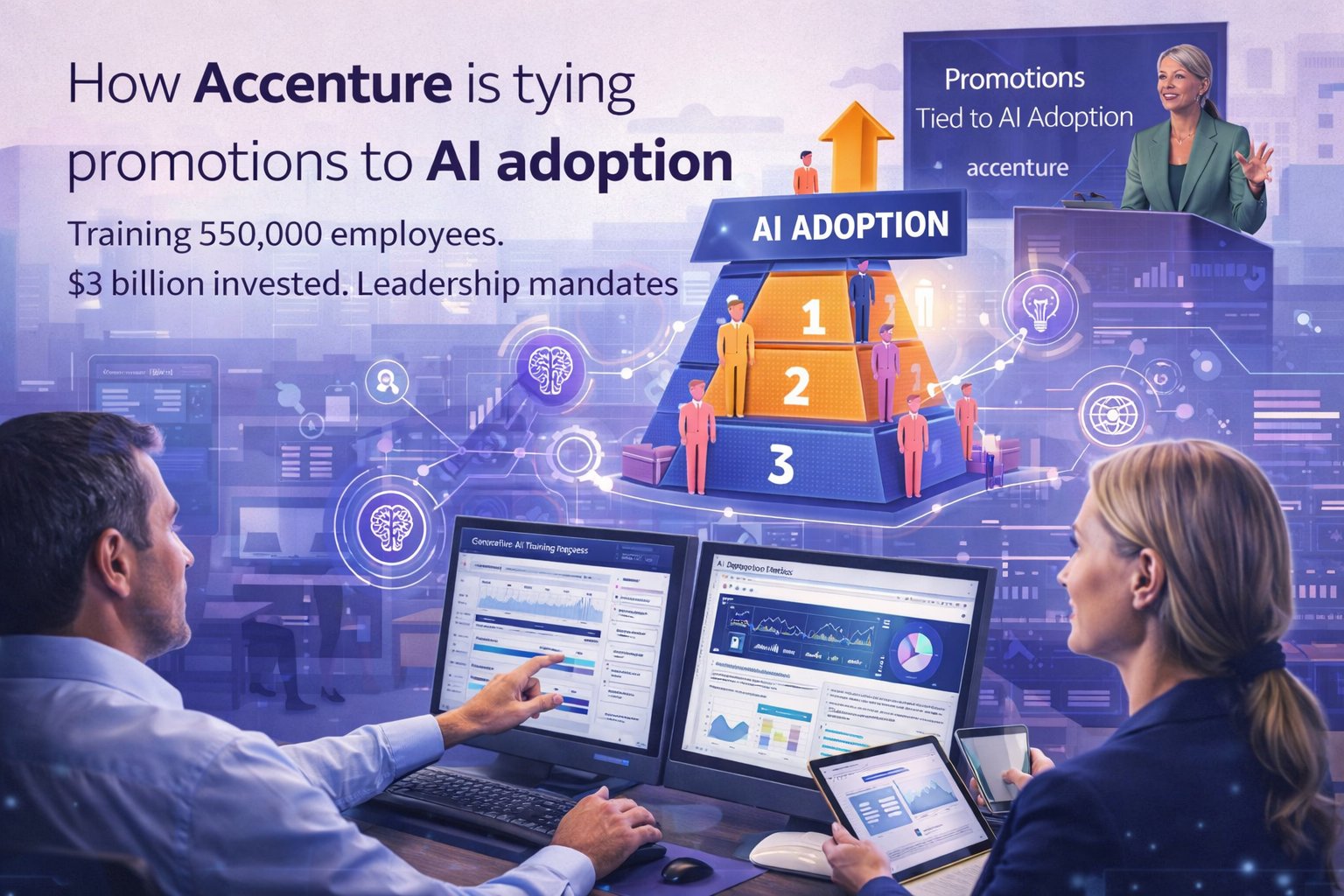
19 March 2026
Accenture Trained 550,000 People on AI. Now It's Firing Those Who Won't Use It.
Accenture invested $3 billion in AI and trained 70% of its workforce. Adoption still stalled. Now promotions depend on usage. There's a lesson here for every business.
Read Article →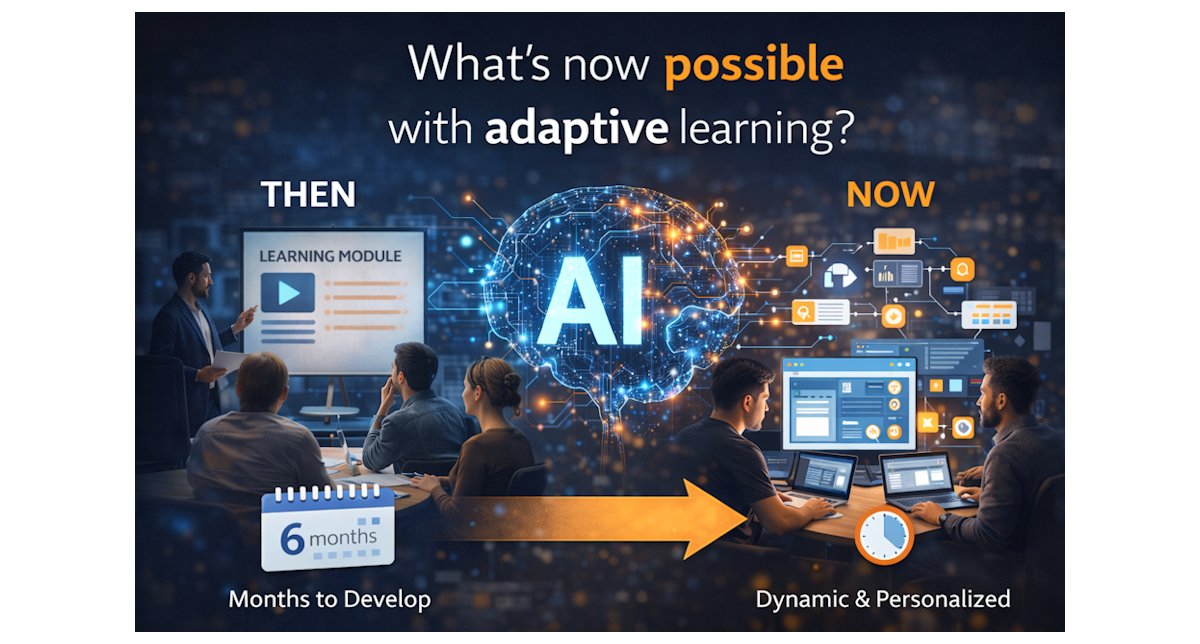
12 March 2026
Digital Learning Has Changed More in Two Years Than in the Previous Twenty
New research shows AI-first learning teams vastly outperform traditional approaches. Here's what's now possible, and why most organisations are still behind.
Read Article →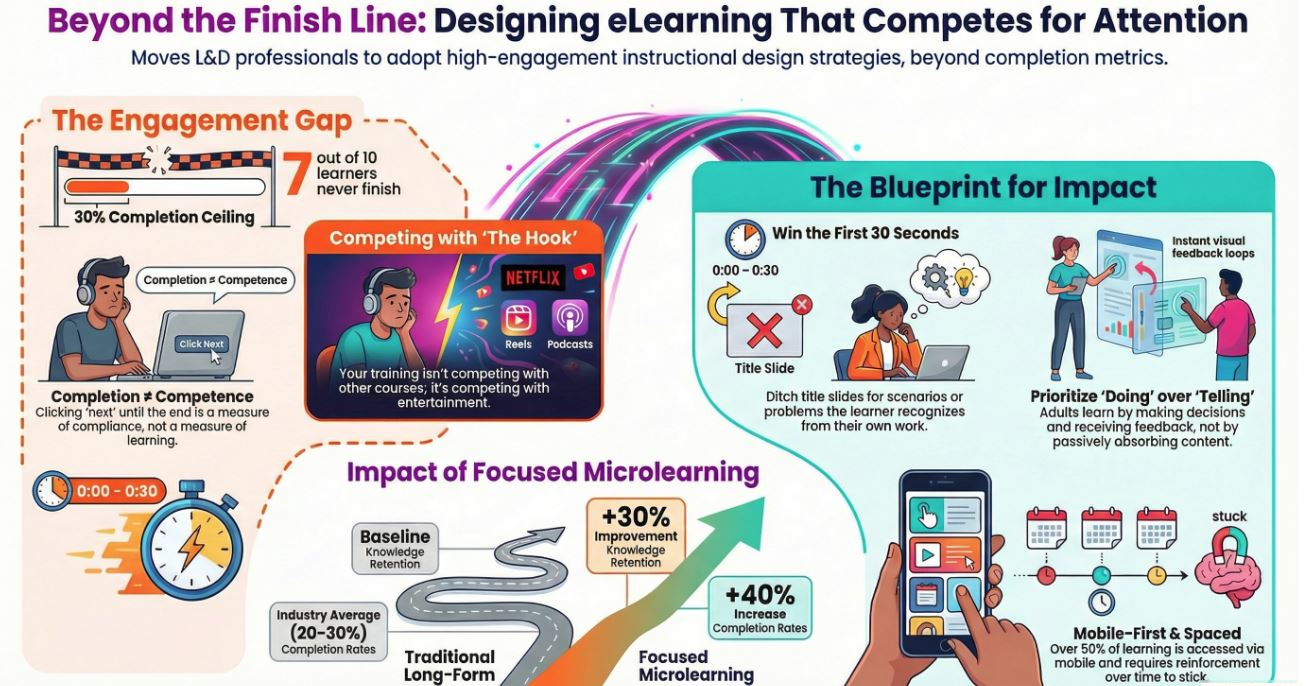
5 March 2026
The Industry Average for eLearning Completion Is 20%. That's Not a Learner Problem.
Most eLearning fails not because learners won't engage, but because the content was never designed to compete for their attention.
Read Article →